Tuesday, November 29, 2011
Pickleball Strategy: Partner Switch
Pickleball owes some of its origins to tennis, and ex-tennis players are making the switch to pickleball. In tennis this year (2011) for men's doubles the points leaders are a set of brothers born 3 minutes apart named Bob & Mike Bryan. If you have ever watched them before, or any other great doubles team you'll know of the need for communication on the court. far too many times in pickleball I see a player encroach on his partners space, leaving a wide empty space for the opponents to hit the ball to. We might go across the front for a quick poach, or maybe our forehand smash is lined up better on our team members side, or even if we go for that baseline lob, we should be communicating with our partner by yelling "SWITCH." Then our partner knows that they should get into the other court to protect it as normal. Once the play is finished we switch back to our usual places. Watch some top ranked tennis doubles, or any other doubles racquet sport like badminton, squash, racquetball and see how the partners communicate with each other effectively. "SWITCH!!!"
Pickleball Strategy: Basketball defense
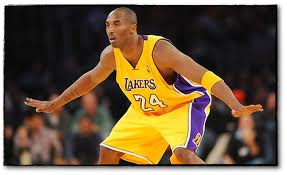
Every Monday, I help coach my son's elementary basketball team. One of the biggest drills that we work on is defense! Defense is not letting the other team score. Good defensive players in basketball like Kobe Bryant are how we should be playing pickleball. In basketball drills we do side steps, never allowing our feet to get to close together, getting our hands up and out for quick reaction, and always keeping an eye on our opponent(s.)
When I'm playing with my pickleball partner at the net, and my opponent forces a shot to us down the side lines that my partner needs to go for, I have to do quick side steps to cover him up, not allowing a huge gap to come between us. My partner and I should be moving in tandem up and back, side to side. We need to know where the ball is at all times of course, but we also need to anticipate our opponents by keeping our eyes on them. It's been said before, but get your paddle up; that helps for faster reaction that having your paddle at your waist, or at your knees. A great defense puts us in contention for great offense.
Pickleball in New Westminister
The other day I had the great opportunity to return to a great group of new pickleballers in New Westminister. They play Monday & Thursday mornings at Century House. They have 1 court available only, but have been rapidly filling it with new players. They all wanted paddles, and some instruction to make sure they were doing things properly. They also wanted to get prepared to compete in the 2012 Seniors games that will be in the backyard in Burnaby. It's great to see a group that is so excited to get out and play for exercise, fun social, and maybe a little friendly competition. That's what pickleball is all about.
Monday, November 14, 2011
Pickleball Nationals 2011 Results
Okay so the picture above isn't at the 2011 Pickleball nationals in Buckeye Arizona, it is from our own tournament in Abbotsford last year. But it does show a local mens double pair who attempted to compete at the recent nationals. Local players Dave Touchet (far right) and Pickleball Canada Prez Colin Caldwell (far left) competed in the men's doubles 60+. Although they didn't win or place for a medal, they held their own, winning 3 sets until they were eliminated. Mark Friedenberg (creator of pro-lite paddles) & Alan Christiansen (creator of Spikes/ZZ2 paddles) eventually won the division.
Steve Wong (creator of S-type paddles) won 4 silvers in many different categories including the extremely rigorous 19+ mens singles.
Other notable locals that won medals are Carol Haworth (Abbotsford/Chilliwack) that won a bronze with her partner in the women's doubles 70+. Congratulations Carol from your friends in the Fraser valley!!!!!
If you're interested in all the results, check out the USAPA.com
Pickleball goes to University
Last week I had the great opportunity to attend a Pickleball session at our local University, or UFV. I didn't even know that a pickleball group existed there until I was invited to bring some paddles and balls to their group by their pickleball promoter: Bill Neudorff. Bill had mentioned that they usually average 8-12 players for their 1 hour session comprised of Faculty, staff, and students. Either there was a news that an outsider was attending, or they were new people excited about pickleball ( I choose the latter) there were 25-30 pickleballers in attendance. After giving some correction to their net heights, and some mistaken rules, I was able to give some instruction to this great group of players. The gym coordinator was overjoyed at the response, and even played along for the games, and was excited for the new outlet and sport to be offered at UFV. The students have a UPASS that allows them to use any rec center in Abbotsford free, and invited them to our nightly pickleball sessions to further their game. They play Thursdays from 4-5 pm in the gym, but according to the gym coordinator they are looking at extending the time.
Pickleball Rules Refresher: Service ettiquette
Last week at Pickleball I was playing doubles against a player who consistently served the ball to me before I was even ready. He said that as long as he was ready, then he could serve. Is this true?
According to the International Federation of Pickleball rules it states:
The 10-Second Rule. The “10-second rule” applies to both server and receiver, each of whom is allowed up to 10 seconds after the score is called to serve or be ready to receive. It is the server’s responsibility to look and be certain that the receiver is ready to receive serve.
4.J.1. After one technical warning has been issued by the referee, further delays on the part of the server or the receiver exceeding 10 seconds shall result in a technical foul and a point awarded against the offender.
4.J.2. If the server serves the ball while the receiver is signaling “not ready,” the ball will be re- served with no penalty and the server shall be “warned” by the referee to check the receiver. If the server continues to serve without checking the receiver, the referee may call a technical foul and award a point to the receiver’s score.
4.J.3. After the score is called, if the server looks at the receiver and the receiver is not signaling “not ready,” the server may then serve. If the receiver attempts to signal “not ready” after the serve is made, then the serve stands, whether or not the ball is returned.
IFP Comment: A receiver who attempts to return the service shall be considered to have been ready. If the receiver has signaled not ready, the service must be replayed.
Sunday, November 6, 2011
Pickleball Rules Refresher: it touched me!
At pickleball last week, my partner was struck in the belly (he had some extra halloween candies, but nothing to say my partner had a big gut.) Would this be a fault to stop play, or should the point be replayed?
A fault is any action that stops play or creates a violation of the rules. A fault will be declared for
the following:
7.F. The ball in play strikes a player or anything the player is wearing or carrying. There is one
exception to this rule: if the ball strikes the player’s paddle hand below the wrist, the ball is
still in play. If the ball strikes a player standing out of bounds, that player loses the rally. In
doubles, if the serve strikes the receiver’s partner, it is a point for the serving team,
providing it is not a let serve. This rule also includes balls that appear to be hit out of
bounds: during play, if you catch the ball or try to stop it from heading out of bounds, you
lose the rally.
USAPA Comment. If the player is in the process of changing hands with both hands on the
paddle, or is attempting a two-handed stroke and either hand is hit below the wrist, then
the ball is considered in play.
Subscribe to:
Posts (Atom)


